
Laos: The quiet magic of waterfalls & rice rituals

Luang Prabang is located on the Nam Khan River and a must visit when you’re in Laos. Quiet cafes, handicraft shops and temples are dotted along the streets. The city comes alive first thing in the morning when monks collect alms and later in the evening it’s buzzing again when the night market opens. There is something spiritual, humbling and mesmerising about this place.
Good to know:
Official language: Lao (or Laotian). English is spoken in tourist areas and hospitality.
Currency: Lao Kip (LAK).
Cash is king! Hotels and larger shops and restaurants will accept credit cards but will always charge you a 3-5% surcharge. You can pay with dollars but they need to be in pristine condition. They’re very particular about the condition of bank notes (also of their local currency, so make sure you always check your change and don’t accept torn/ripped bank notes)
Laos has a population of 7.97 million people and Vientiane is the capital.
Laos has the option of applying for an E-Visa or visa on arrival. The E-Visa can save you some time (as you don’t need to queue twice) and you won’t need to use cash on arrival.
There is an airport shuttle between Luang Prabang airport and the centre of Luang Prabang (11 EUR for two people) It’s also possible to take a taxi or pre-book one with your accommodation.
Motorbike rental: if you rent a motorbike, don’t leave your passport as a deposit. Find a place that accepts a driver’s license or other form of ID.
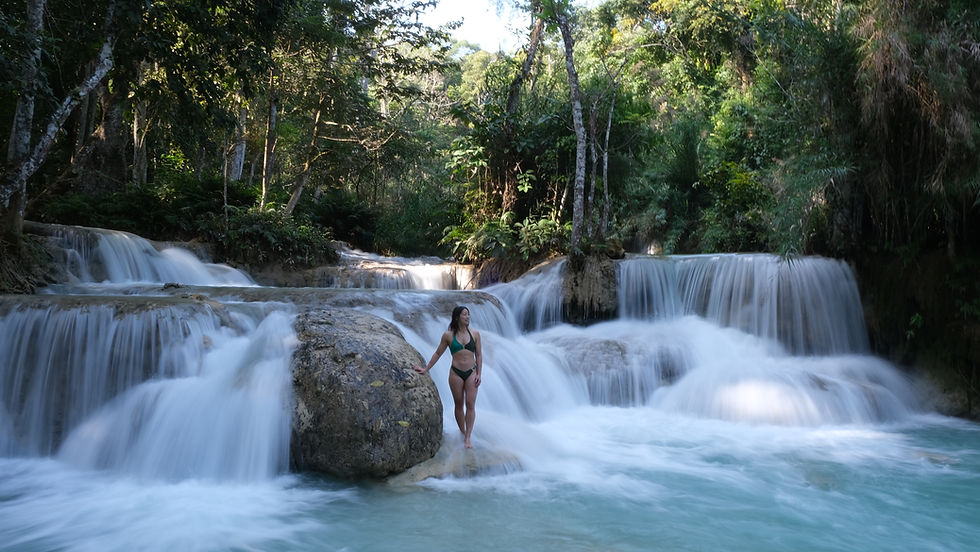
Kuang Si Waterfall: pack your swimming clothes, towel, sandals, sunscreen, insect spray, water and snacks. You can swim in the waterfall pools.
Top sites to visit:
Kuang Si Waterfall
Wat Xiang Thong
Phousi Hill
Pak Ou Caves
Shops & handicraft:
Ock Pop Tok Living Craft Centre
The Weaving Sisters
Chanthasarn Weaving Silk Shop
Mae Onn Lao Textiles
Garden of Eden (jewellery store, you can also make your own)
Heuan Chan Heritage House
How to get around:
Scooter/motorbike rental (we recommend: Bamboo Motorbike Rental)
Walk
Taxi
Day 1: Morning alms, Wat Xiang Thong & Phousi Hill
One of the most beautiful traditions to witness in Luang Prabang is the daily morning alms ceremony, a centuries old Laos Buddhist ritual known locally as Sai Bat. At sunrise, saffron-robed monks walk barefoot through the streets collecting alms from local residents. Almsgivers pass small portions of sticky rice or other treats into a bowl that the monk is carrying, an act of generosity that allows locals to make merit while providing monks with their daily meals. Aside from a prayer or blessing, this ritual happens in complete silence.
The morning alms usually take place around 5:30–6:30am from March to October and 6:00–7:00am from November to February. As timing can vary slightly, it’s best to check with your hotel if you want to be sure. The ceremony can be observed along Sakkaline Road. Nearby, Le Banneton Cafe & French Bakery is a great spot to sit with a coffee and pastry while watching this peaceful morning ritual unfold. Nowadays, it’s quite common for tourists to be invited to join the alms giving, with locals approaching visitors to participate. While some travellers enjoy taking part, we preferred to quietly observe from a distance. If you’re looking for a more peaceful experience, it might be worth exploring quieter streets or areas on the other side of the Nam Khan river.
Spend your afternoon exploring Wat Xieng Thong, one of Luang Prabang’s most beautiful temples. The buildings are decorated with intricate mosaic tiles and you can step inside to admire the interiors, just remember to take your shoes off. There is a small entry fee of 20,000 LAK (0.80 EUR) per person.
Head to Phousi Hill for sunset, the most popular viewpoint in the city. The fastest and more direct route up is the entrance opposite the night market, called the Phousi Hill Front Entrance on Google Maps. If you have time, the more scenic route starts near Wat Siphoutthabat and is what we would recommend. It takes you past the Buddha’s Footprint Temple and some beautifully decorated bridges. This path takes about 15 - 20 minutes and there are quite a few steps but the views along the way make it worth it. Comfortable sandals or trainers are a good idea for the climb and since you're passing by temples, it's best to cover your knees and shoulders. There is also a small entry fee to the top of Phousi Hill. Aim to arrive about an hour before sunset because it gets busy. The pathways are narrow so look for a good spot to sit on the side facing the Mekong River. The river isn’t always the prettiest shade but at sunset it’s like a soft pastel glow washes over the landscape.

Day 2: Kuang Si Waterfalls
Start early for a trip to Kuang Si Waterfalls, which open at 8:00. It takes about an hour to get there from Luang Prabang by motorbike. The journey is scenic but a bit bumpy, with potholes and dirt roads, so dress warmly and bring something to cover your face from the dust.

Once you arrive, park and pay the entrance fee, then take the free shuttle to the start of the waterfall paths. Head straight to the main Kuang Si waterfall at the end of the path. Early in the morning, the bridge right by the main waterfall is quiet, making it the perfect time to admire one of Southeast Asia’s most stunning waterfalls without the crowds. The morning light hitting the spray of the falls is simply magical, it’s one of those moments you’ll never forget. According to local legend, the falls were created when a wise old man dug into the earth, releasing the waters of Nam Si. A golden deer made its home under a rock in the waterfall and the sound of water echoing off it drew people to the site. That’s why the falls are called Tat Kuang Si - Tat meaning waterfall, Kuang meaning deer and Si from dig.
You can swim in many of the pools but check the signs, as some are sacred and off-limits. There are plenty of picnic areas and seating for relaxing. Around 9:30, larger tourist groups begin arriving, so early mornings are ideal for a peaceful visit. On your way through the park, you’ll pass a small Asiatic Black Bear sanctuary, home to bears rescued from poaching and bile farms. Due to the limited space at the national park they have another larger site near to Luang Prabang. If you fancy a quick snack when you head back to Luang Prabang, you can stop off at Laos Buffalo Dairy to try their buffalo ice cream.
Day 3: Pak Ou Caves
The Pak Ou caves are about an hour north of Luang Prabang. It’s a popular stop on Mekong river cruises, so you can book one of those or head there independently for a bit more flexibility. The caves open at 8:00 so we recommend heading there early.
We navigated ourselves to the small riverside village of Pak Ou and from there you’ll need to hop on a boat to cross the river. Tickets are sold right next to a local spot called Namthip Sokdy and depending on the type of boat you choose, you’re looking at around 10,000 - 20,000 LAK (0.40-0.80 EUR). It’s such a short ride that we’d suggest going for the simplest option. One tip: don’t wear your nicest shoes. Between stepping on and off the boat and the sandy riverbanks, you’ll get slightly wet and muddy feet.

So what’s the significance of these caves? They are two sacred shrines built into the cliffside, overlooking the Mekong River. Inside, you’ll find over 4,000 Buddha sculptures, left by locals and pilgrims over centuries. If you want to reach the upper cave, be prepared to climb a few stairs up. The view will be worth it!
Beyond the caves, the surroundings really steal the show. The whole area is framed by dramatic limestone cliffs and Mekong river below, making it a beautiful spot to appreciate how beautiful this part of Laos really is.
If you’re looking to pick up some souvenirs we would recommend doing this on your way back to Luang Prabang. Navigate to “The Teahouse Luang Prabang”. This street runs parallel to the road along the international airport and is lined with small silk weaving shops that we honestly preferred over the night market in the centre of town. Aside from a few good stalls, a lot there felt quite mass produced and lower quality. If you’re feeling more creative and hands-on, it’s worth stopping by Weaving Sisters for a weaving workshop.
This side of town has been a bit quieter the last few years. The bamboo bridge over the Nam Khan river has been taken down, so crossing over isn’t as easy. For now, you’ll need to use the old French bridge or take a boat to spots like Dyen Sabai restaurant.
Where to stay:
Elegant Boutique Hotel Luang Prabang (75 EUR/night) - Located behind one of the temples off the main road, this charming hotel feels like a peaceful retreat. The rooms are generously sized and look out over a courtyard, where a pond filled with fish adds to the serene atmosphere. Breakfast is served right in the courtyard, freshly prepared to order and delicious! The staff are attentive and eager to help, whether you’re arranging day trips or booking airport transfers.
For the foodies:
Breakfast/coffee
Le Banneton Café & French Bakery (located on Sakkaline Road which is the main road where you can view the morning alms. They’re open from 7:00 in the morning and have freshly baked pastries and coffee)
Formula B (sadly our favourite coffee place was a pop-up and has permanently closed, so this is our second favourite place. It can get a little busy because they also seem to be popular for desserts and cakes but there’s lots of space upstairs, so just head to the back and you’ll find the stairs to the first floor)
Lunch/snacks
Authentic Ramen (a fantastic spot for hand-pulled noodle soup - just don’t expect Japanese-style ramen. We loved the braised beef and classic beef noodles. Prices range from 70,000–90,000 LAK (3–4 EUR), it’s an incredibly affordable and filling lunch. They even offer free noodle refills, though we didn’t need them. It’s run by just two people, so there can be a bit of a wait at lunchtime but it’s absolutely worth it. The only downside is that smoking is allowed inside but if you can overlook that, you won’t be disappointed by the food)
Kin Khao at Heuan Chan Heritage House (you will need to pay an entrance fee to access this place because it’s like museum but it’s worth it for the chance to explore the traditional architecture and learn about local history and customs. We had the pork bánh mì, which we loved and enjoyed sitting outside while taking in the peaceful surroundings)
Miti Restaurant (the absolute best mango sticky rice we’ve ever had, possibly ever. Despite fairly average Google reviews, the dessert menu caught our eye and completely exceeded expectations. If you’re sharing, go for the option with coconut ice cream, it’s incredible)
Gelato del Lao (if you have an ice cream craving during your trip in Luang Prabang, this is the place to go)
Laos Buffalo Dairy (located between Luang Prabang and Kuang Si waterfalls, it makes for a nice stop for ice cream or a snack along the way)
Dinner
Dyen Sabai Restaurant (the perfect spot for dinner overlooking the Nam Khan River. Tables are set up in a beautiful and spacious garden, so reservations weren’t necessary for us. They’re best known for their Lao BBQ, which you can cook right at your table over coals. Don’t miss the eggplant dip served with sticky rice)
Lost in Baan (a stylish Asian fusion restaurant with a beautiful interior, we recommend making a reservation. Prices are a bit higher than average for Luang Prabang but the creative dishes and setting make it worthwhile. Don’t miss the marinated buffalo steak and pork belly, both were excellent!)
Little Lao Culture Bar (offers elevated Lao cuisine in a gorgeous setting with a beautiful bar and interior. We visited for lunch, but it would be just as great for dinner. The Nam Khao, or crispy rice salad, is packed with herbs and full of flavor and the pork belly was another standout)
Bamboo Garden (a very popular spot, so it’s best to arrive right at opening to secure a seat. It’s a great place to try local dishes in a more authentic setting and the prices are very reasonable)


Comments